
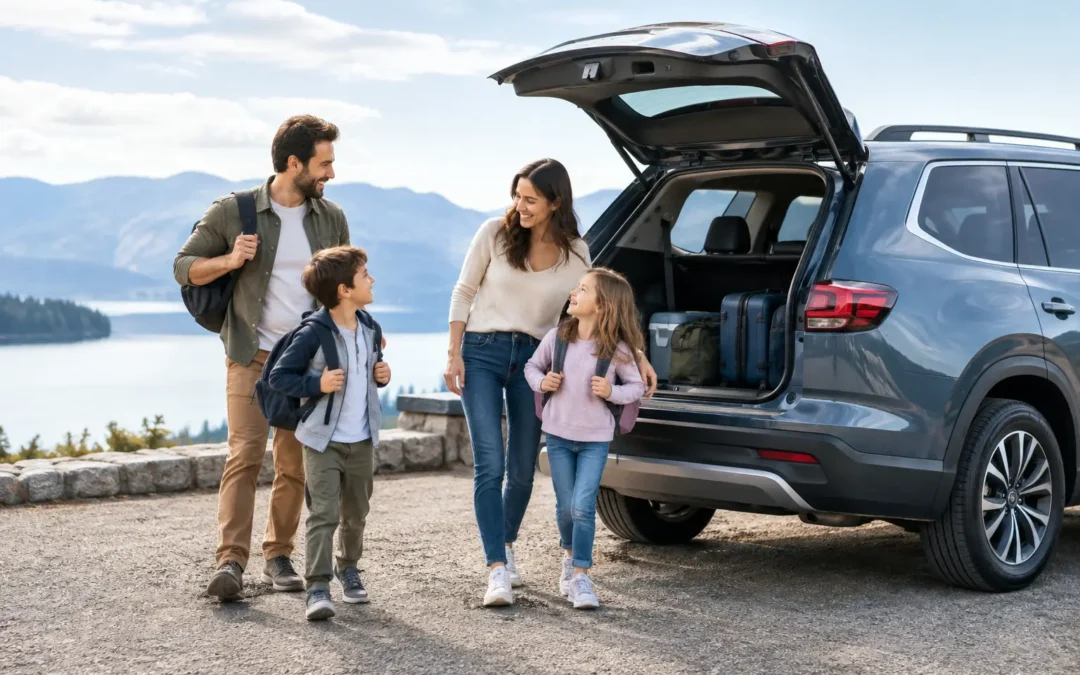
A family SUV has to earn its place every day. It needs to handle school runs, supermarket bags, weekend beach trips, visiting relatives, and the occasional long drive across Cyprus without making passengers feel cramped or pushing monthly costs too high. This guide to choosing a family SUV focuses on the details that make a real difference after the first test drive: usable space, safety, running costs, and the flexibility to match your family’s plans.
The right choice is not always the biggest or most expensive model. It is the SUV that suits the people who will use it most, the roads you drive, and the budget you want to keep predictable.
Start With Your Family’s Everyday Routine
Before comparing badges, screens, or engine sizes, think about a typical week. How many people travel in the car most days? Do you regularly carry a stroller, sports equipment, work bags, or luggage? Is your route mainly urban driving in Limassol, longer highway journeys, or a combination of both?
A compact SUV can be an excellent fit for a couple with one young child. It is easier to park, generally uses less fuel, and still gives you a higher seating position and more versatile cargo room than a conventional hatchback. For larger families, or anyone who often drives with grandparents, friends, or bulky gear, a midsize or seven-seat SUV can offer valuable breathing room.
Do not judge cargo capacity by a brochure figure alone. Open the tailgate and look at the shape of the space. A wide, square trunk is often more useful than a deep but narrow one. Check whether the loading height is manageable when lifting a stroller or heavy shopping bags, and whether the rear seats fold easily when you need extra room.
Count Seats, Not Just Seatbelts
An SUV may be advertised as a five- or seven-seater, but comfort varies greatly between models. Sit in every row you expect to use. Adults may find a third row suitable only for shorter journeys, while children may be perfectly comfortable there. If you need to fit child seats, confirm that the rear doors open wide enough and that the anchor points are easy to reach.
Bring a child seat to the viewing or test drive if possible. It is the simplest way to see whether a vehicle works for your family rather than simply looking good on paper.
Guide to Choosing a Family SUV by Safety
Safety should be standard, not an expensive afterthought. Most modern family SUVs offer a strong foundation of airbags, electronic stability control, anti-lock brakes, and rear parking sensors. The difference often comes from the driver-assistance features that help reduce stress in busy traffic.
Useful features include automatic emergency braking, lane-departure warning, blind-spot monitoring, adaptive cruise control, and a rearview camera. For families who spend time in city traffic, parking sensors and cameras can quickly become everyday essentials. On longer trips, adaptive cruise control and lane support can make highway driving calmer, though the driver must always remain fully attentive.
Check the vehicle’s safety rating from a recognized independent testing organization where available, but also consider the equipment fitted to the exact model. Safety features can differ by trim level, model year, and market specification. A well-maintained used SUV with the right safety technology may be a smarter choice than a newer vehicle with a less complete equipment list.
Visibility matters as much as technology. From the driver’s seat, look for clear sightlines through the windshield and side windows. Large mirrors, a good camera system, and sensible blind-spot coverage make daily driving more confident, especially in crowded parking areas and narrow streets.
Choose a Size You Can Live With
A larger SUV can feel reassuring, but more size brings trade-offs. It may cost more to fuel, insure, and park. In central Limassol or busy residential areas, a vehicle that is too wide or too long can turn simple errands into a chore.
Compact SUVs are usually the practical middle ground for smaller families. They offer efficient engines, easier maneuverability, and enough flexibility for daily life. Midsize SUVs add rear-seat comfort and trunk space, making them ideal for frequent road trips or families with older children. Full-size and luxury SUVs provide the strongest presence, premium comfort, and often seven seats, but they make the most sense when you will genuinely use that extra capability.
It depends on how you travel. A family that mostly drives locally may value easy parking over a third row. A family that regularly heads to the mountains, airport, or holiday accommodation with full luggage may appreciate the extra space and stronger engine of a larger model.
Test the Driving Position
The elevated seating position is one of the main reasons drivers choose an SUV, but not every cabin feels the same. Adjust the seat, steering wheel, and mirrors as you would for a normal journey. Make sure the controls are simple to reach and the infotainment screen is not distracting.
Pay attention to ride comfort as well. Large wheels can look impressive, particularly on premium SUVs, but smaller wheels with deeper tire sidewalls often give a smoother ride over uneven roads. For a family vehicle, comfort is not a minor detail. It affects every passenger on every trip.
Compare Fuel Costs With the Way You Drive
Fuel economy is not just about selecting the smallest engine. The right powertrain depends on your mileage, driving conditions, and priorities. Hybrid SUVs are a strong option for regular urban driving because they can reduce fuel use in stop-start traffic while keeping the convenience of a conventional fueling routine.
Gasoline SUVs can suit drivers with moderate mileage and a preference for straightforward ownership. Diesel may still make sense for high-mileage highway drivers, although it is less compelling for short urban journeys. Plug-in hybrids can be attractive if you have reliable charging at home or work and make enough short trips to benefit from electric driving. Without regular charging, their extra weight can limit the expected savings.
Ask for realistic fuel-consumption expectations rather than relying only on official figures. Your actual result will depend on traffic, air-conditioning use, passenger load, road conditions, and driving style. A slightly more efficient SUV can create worthwhile savings over several years, but a vehicle that is too small for your needs may cost you in convenience.
Look Beyond the Monthly Payment
A low purchase price or rental rate is only one part of the decision. Family motoring comes with insurance, scheduled maintenance, tires, road tax, repairs, and the possibility of unexpected expenses. For buyers, it is wise to consider the vehicle’s service history, condition, warranty coverage, and expected resale value.
For families who prefer predictability, a long-term rental can be a practical alternative to ownership. With an all-inclusive monthly arrangement, costs such as maintenance, comprehensive insurance, road tax, and tires can be covered in one clear payment. This can be especially useful when your needs may change, whether that means a growing family, a new work arrangement, or a move to a different part of Cyprus.
NXM Empire offers long-term rental options from three months, giving drivers a straightforward way to access everything from efficient hybrid SUVs to premium models without taking on the full commitment of immediate ownership. The best option depends on how long you expect to keep the vehicle and how much flexibility matters to you.
Buy Used With Confidence, Not Assumptions
A quality used family SUV can deliver excellent value, particularly when it has been properly maintained and inspected. Premium models can also become more accessible on the used market, offering refined interiors, advanced safety systems, and strong performance at a more manageable price point.
Still, condition matters more than appearance. Review the service history, check tire wear, test all electronic features, and look closely at the interior and cargo area for signs of heavy use. During a test drive, listen for unusual noises, check that the transmission shifts smoothly, and make sure the brakes feel confident and controlled.
A dealer-approved vehicle can provide additional reassurance, but you should still ask clear questions about the car’s history, maintenance, and included support. Transparent information is a sign that you are dealing with a provider that values long-term trust.
Make the Final Choice After a Real Test Drive
The right family SUV should feel easy, not impressive only for the first ten minutes. Drive it on the roads you use most. Park it. Sit in the back. Open the trunk. Connect your phone. Imagine loading it before a weekend away or using it after a long workday.
Choose the SUV that gives your family enough room to grow, sensible safety features, and costs you can plan for with confidence. A vehicle that fits your real life will deliver far more value than one chosen only for its badge, size, or showroom appeal.