
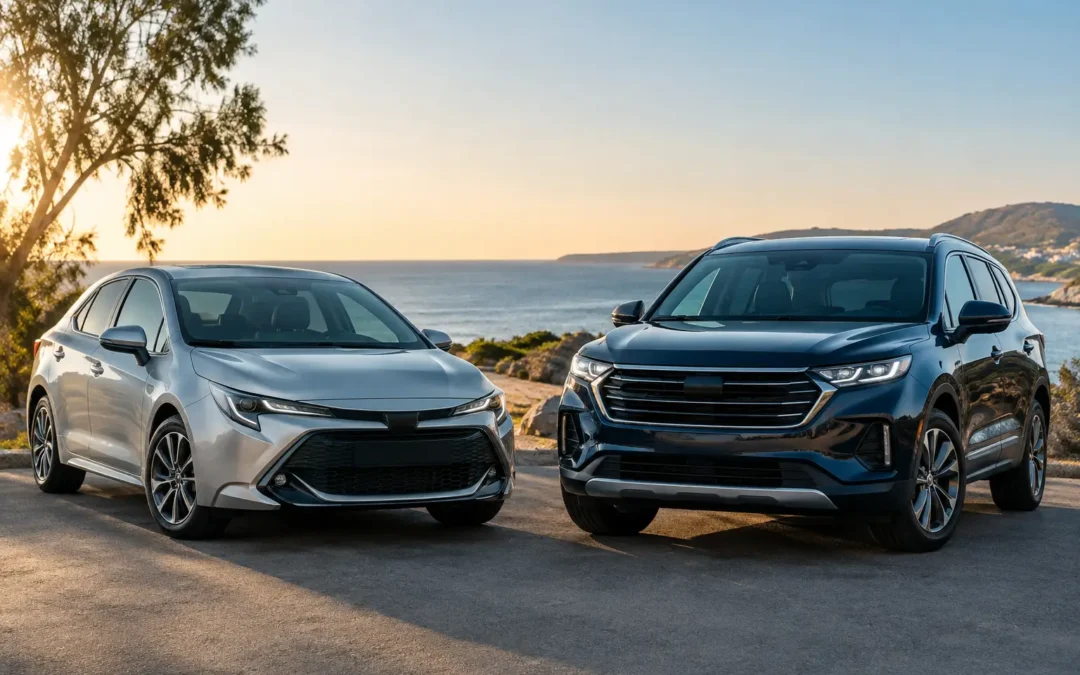
A daily drive from Limassol to the office, school, or a client meeting can look very different from a regular highway run to Nicosia, Paphos, or Larnaca. That is why the hybrid versus diesel decision is not simply about choosing the lowest fuel price. It is about selecting a vehicle that fits your routes, your monthly budget, and the level of comfort you expect every day.
For many Cyprus drivers, a hybrid is the easier choice for city use and mixed driving. Diesel can still make excellent sense for high-mileage drivers who spend long hours on open roads. The right answer depends on how you actually use the car, not just what looks best on a specification sheet.
Hybrid Versus Diesel: The Everyday Difference
A hybrid combines a gasoline engine with an electric motor and battery. In most conventional hybrids, the battery charges itself through the engine and regenerative braking, so there is no need to plug it in. The electric motor assists at lower speeds, during acceleration, and in stop-start traffic, reducing gasoline use where a conventional engine is least efficient.
A diesel vehicle relies on a compression-ignition engine designed to deliver strong low-end pulling power and impressive efficiency on longer journeys. Diesel engines have long been popular with drivers who cover significant mileage, particularly on highways where the engine can settle into an efficient, steady rhythm.
The practical difference is clear. Hybrids tend to be at their best in town. Diesels tend to show their strengths on longer, faster routes. If your week includes traffic around Limassol, short errands, school drop-offs, and regular parking maneuvers, a hybrid often feels quieter, smoother, and more economical. If you regularly travel across Cyprus for business or spend most of your time on the highway, diesel may provide stronger long-distance efficiency.
Fuel Economy Depends on Where You Drive
Published fuel-consumption figures are useful, but your real-world result depends heavily on your route. A hybrid can recover energy every time you slow down. This makes it particularly effective in urban traffic, where braking and low-speed driving are frequent. At traffic lights and in slow-moving queues, the gasoline engine may switch off entirely for short periods.
Diesel does not benefit from stop-start driving in the same way. It is more efficient than many gasoline alternatives, but repeated short trips can prevent the engine from operating at its ideal temperature. Modern diesel models also use emissions-control systems that are better suited to vehicles driven regularly for longer distances.
Consider your typical week rather than your occasional weekend trip. A driver traveling 10 to 20 miles a day around Limassol may see better value from a hybrid. Someone covering 100 miles a day for client visits, airport journeys, or intercity work may find that diesel fuel economy remains highly competitive.
Fuel prices also move over time. Choosing solely because diesel is cheaper or more expensive at a particular moment can be shortsighted. The more reliable calculation is total running cost based on your mileage, driving pattern, insurance, maintenance needs, and the vehicle category you want.
City Comfort Favors Hybrids
Hybrid vehicles have become a natural fit for drivers who want a calmer experience in busy areas. At low speeds, many can run partly on electric power, which reduces engine noise and makes city driving feel more refined. This is especially appealing in compact hatchbacks, sedans, and crossover SUVs used for commuting and family life.
The smooth response of an automatic hybrid can also reduce fatigue in heavy traffic. There is less concern about clutch use, fewer noisy engine revs, and a more relaxed feel when moving between lights and roundabouts. For professionals arriving at meetings or families managing daily schedules, that extra ease can matter as much as a fuel-saving figure.
Hybrid technology is no longer limited to small economy cars, either. It is available across many categories, including executive sedans and premium SUVs. This gives drivers the option to combine lower urban fuel use with the comfort, presence, and equipment they expect from a higher-end vehicle.
Highway Mileage Can Favor Diesel
Diesel still has a strong case for drivers with consistent highway mileage. Its torque is useful when carrying passengers, luggage, or work equipment, and it can make overtaking and hill climbing feel assured. For a larger SUV or executive vehicle used for frequent intercity travel, that relaxed pulling power remains a genuine advantage.
Drivers who make regular airport runs, visit sites across the island, or travel between cities may also appreciate diesel’s ability to deliver efficient cruising at sustained speeds. In this situation, a diesel vehicle is not an outdated choice. It can be a practical, capable tool for demanding mileage.
The key is avoiding a mismatch. A diesel that only completes short urban trips may not deliver the savings a buyer or renter expects. Its emissions equipment can also be less suited to a life of constant brief journeys. If most of your driving happens within Limassol, choose diesel only when you have a clear reason to do so.
Costs Beyond the Fuel Pump
Fuel is visible, but it is only one part of the equation. A hybrid may cost more than a comparable conventional vehicle in some cases, while a diesel can bring different servicing and maintenance considerations over time. Model, age, condition, mileage, and service history all matter, particularly when considering a used vehicle.
For buyers, a quality used hybrid should be assessed carefully, including battery health, maintenance records, and the condition of the braking system. A well-maintained hybrid battery is designed to last for many years, but asking the right questions protects your investment. With diesel, check the service record, usage history, and whether the vehicle has been driven in a way that suits its engine and emissions systems.
For long-term renters, predictable monthly costs can make the decision simpler. When maintenance, comprehensive insurance, road tax, and tires are included, you can focus more directly on choosing the vehicle that matches your lifestyle. You are not left estimating every future workshop bill or balancing separate ownership costs.
This is where a flexible rental can be especially useful. A three-month or longer commitment gives you enough time to understand whether a hybrid works for your commute, or whether a diesel better supports your business mileage, without immediately taking on the full commitment of ownership.
Performance, Space, and Lifestyle Matter Too
The hybrid versus diesel choice should not force you to compromise on the type of car you need. A compact hybrid is a smart option for one driver or a small family prioritizing easy parking and low running costs. A hybrid SUV can offer a more elevated driving position, family-ready space, and a quieter daily journey.
Diesel remains appealing in larger vehicles where regular loads and long-distance travel are part of the routine. A diesel SUV can be an excellent match for a family that travels often, a professional carrying equipment, or a company that needs a dependable vehicle for extensive road use.
Premium drivers should also consider how they want the vehicle to feel. Hybrid powertrains often suit those who value refinement, quietness, and smooth city performance. Diesel may suit those who prefer long-range confidence, effortless torque, and frequent highway capability. Neither is automatically more prestigious or more practical. The better option is the one that supports your real priorities.
How to Make the Right Choice
Start with your normal driving week. Count your short trips, traffic time, highway miles, passengers, and luggage requirements. Then look at the vehicle itself rather than judging the fuel type in isolation. A well-chosen hybrid and a well-chosen diesel can both deliver excellent value when matched to the right driver.
Choose a hybrid if most of your journeys are local, traffic-heavy, and relatively short, or if quiet, comfortable urban driving is high on your list. Choose diesel if you cover substantial highway mileage, travel between cities frequently, or need the pulling power and range of a larger vehicle.
At NXM Empire, the strongest choice is always the one that gives you confidence every time you take the wheel. Compare vehicles based on your actual routine, ask about the full monthly cost, and take the time to sit in the car you are considering. The right vehicle should make daily life easier from the first drive onward.