
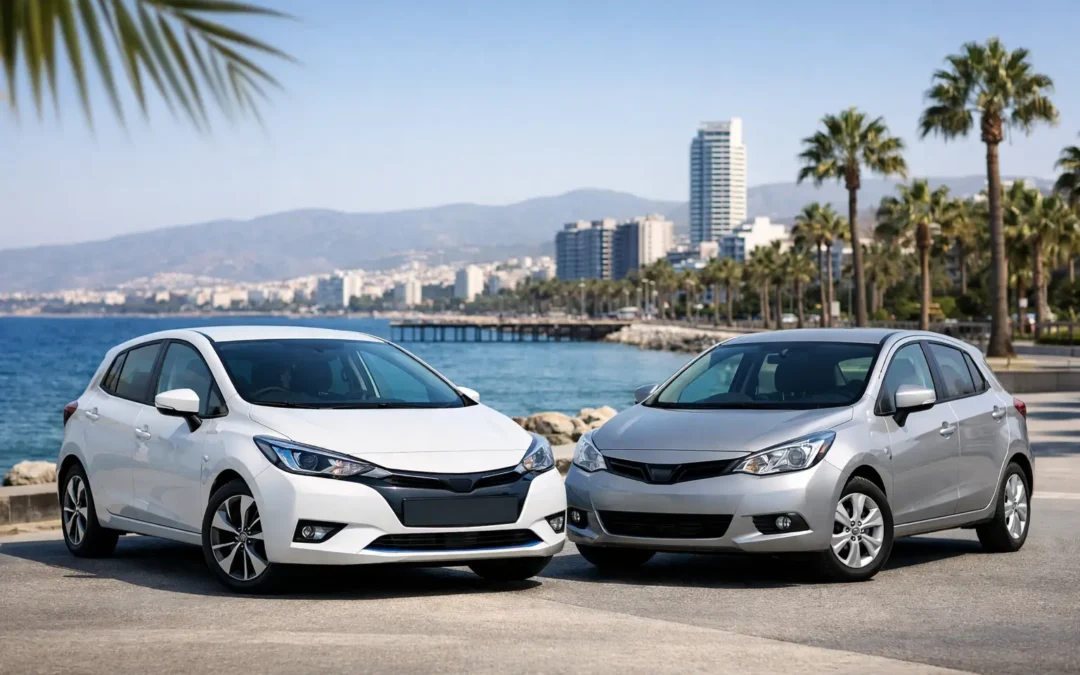
A compact car that spends its week between Limassol traffic, school runs, office parking, and weekend trips needs to be economical without becoming a compromise. The hybrid vs petrol city car decision usually comes down to one practical question: will lower fuel use and smoother urban driving justify the higher monthly or purchase cost?
For many drivers in Cyprus, a hybrid is the stronger match for regular city use. A petrol city car can still be the sensible choice when the budget is tight, annual mileage is low, or most journeys involve open-road driving. The best option is not about following a trend. It is about choosing a vehicle that suits your routes, your budget, and how much certainty you want around monthly costs.
Hybrid vs petrol city car: the real difference
A conventional petrol car relies entirely on its gasoline engine. It is familiar, straightforward, and often less expensive to buy or rent than an equivalent hybrid. Small petrol engines can be very efficient on longer, steady drives, particularly when the vehicle is lightly loaded and driven smoothly.
A full hybrid combines a petrol engine with an electric motor and a small battery. It does not need to be plugged in. Instead, it recovers energy while braking and uses that stored energy to assist the engine or, at low speeds, drive the car electrically for short periods. This is why hybrids are particularly effective in urban traffic, where stopping and starting is unavoidable.
The difference is most noticeable at the moments city drivers experience every day: pulling away from traffic lights, moving through slow queues, finding parking, and waiting at junctions. A hybrid can reduce engine use during these low-speed moments. A petrol car continues to burn fuel whenever its engine is running, even if progress is minimal.
Not every vehicle described as a hybrid delivers the same experience. Mild hybrids use a small electrical system to support the engine but cannot usually travel on electric power alone. They can improve efficiency, but the fuel-saving benefit in town is typically less pronounced than with a full hybrid. When comparing cars, ask which hybrid system is fitted rather than relying on the badge alone.
Fuel costs matter most in traffic
Limassol driving is rarely made up of one uninterrupted highway journey. Traffic around business districts, schools, shopping areas, and the seafront can turn a short distance into a long drive. That is where a hybrid city car earns its place.
Because it recovers energy under braking and can switch off its petrol engine when stationary, a full hybrid generally uses less fuel in stop-and-go conditions. The saving varies with the model, driving style, air-conditioning use, and fuel prices, but drivers who cover frequent urban miles will usually see a meaningful difference over time.
A petrol city car may be close behind on a clear highway run, where the engine can settle into a consistent speed. If your daily route is mainly from Limassol to another city with limited congestion, the hybrid advantage may be smaller. It is still worth comparing official fuel figures, but real-life use matters more than a brochure number. Consider the roads you use most often, not the ideal route used for testing.
Air-conditioning is another local consideration. Cyprus summers place a heavy demand on every car, especially during short journeys when the cabin must cool down quickly. Hybrids remain efficient, but high air-conditioning use, steep climbs, and a full vehicle will affect consumption in both powertrains. The right expectation is lower fuel use, not fuel use that never changes.
Upfront price versus monthly value
Petrol city cars often have the lower entry price. For a buyer focused on keeping the initial outlay as low as possible, that can be decisive. They are widely available, simple to understand, and can represent excellent value when used modestly.
A hybrid may cost more at the start, yet the total cost can be more attractive when fuel savings are considered across several years. This is especially true for commuters, delivery professionals, families with daily errands, and businesses that run cars regularly. The more urban mileage you cover, the more opportunity there is for a hybrid to repay its higher initial cost.
The calculation should not stop at fuel. Consider servicing, insurance, road tax, tires, depreciation, and the time required to organize each of them. These costs can make ownership less predictable than it first appears. A car that looks cheaper on the day of purchase may not be the lower-cost option once every expense is included.
For drivers who do not want the full commitment of buying, long-term rental can make the comparison much clearer. With a fixed monthly price that includes maintenance, comprehensive insurance, road tax, and tires, you can focus on the vehicle and the driving experience rather than a changing list of ownership costs. It also gives you the freedom to choose a fuel-efficient hybrid now without making a long-term investment in a vehicle that may not fit your future needs.
Choose for your driving pattern, not the parking spot
Both hybrid and petrol city cars are easy to park and well suited to narrow streets, apartment garages, and busy shopping areas. The more useful distinction is how they behave during the rest of your day.
Choose a hybrid if you spend a large share of your time in urban traffic, make frequent short trips, or want to bring fuel spending under better control. The quiet pull-away and automatic electric assistance also make a hybrid feel more relaxed in slow-moving traffic. For many professionals and families, that calmer experience is as valuable as the reduced fuel use.
Choose petrol if you drive relatively few miles, have a strict lower budget, or primarily travel at steady speeds outside the city. A modern petrol city car is not an outdated option. It can be economical, dependable, and perfectly suited to a driver whose weekly routine does not involve long periods of congestion.
Drivers who regularly travel from Limassol into hillier areas should take a test drive on a route that resembles their own. Both powertrains can handle inclines well when matched with the right engine output, but a fully loaded car, steep roads, and summer temperatures can change how a vehicle feels. Do not select purely on fuel type if performance, rear-seat space, or luggage capacity is equally important to your lifestyle.
What about battery life and maintenance?
Hybrid batteries are a common concern, particularly for used-car buyers. They are designed for repeated charging and discharging and are supported by the car’s own energy recovery system. A quality hybrid with a documented service history can be a dependable everyday choice.
Still, condition matters. On a used hybrid, ask about service records, battery checks where available, warranty coverage, and the vehicle’s overall history. The same standard applies to a petrol car: a low price does not replace proper inspection, maintenance records, and confidence in the seller.
Maintenance needs differ slightly. Petrol cars have a traditional engine system with regular servicing requirements. Full hybrids still have petrol engines, but regenerative braking can reduce brake wear because the electric motor helps slow the car. Neither option is maintenance-free, which is why a transparent all-inclusive rental arrangement can be valuable for drivers who prefer predictable mobility over unexpected workshop bills.
A practical choice for every budget
The best city car is not always the cheapest one, the newest one, or the one with the lowest claimed consumption. It is the car that makes your normal week easier. A hybrid is often the leading choice for high-mileage urban drivers who want efficiency and a more relaxed drive. A petrol city car remains a smart, accessible solution for lighter use and value-focused budgets.
At NXM Empire, the choice can be made around your lifestyle rather than a one-size-fits-all contract. Whether you need an affordable hybrid for everyday Limassol driving or a comfortable petrol vehicle for flexible long-term use, clear monthly pricing helps you decide with confidence.
Before making your decision, look at a typical month rather than a single journey. Count the traffic, the short trips, the highway miles, the passengers, and the costs you would rather not manage separately. The right city car should give you dependable freedom to move, with a payment and driving experience that feel right every time you get behind the wheel.