
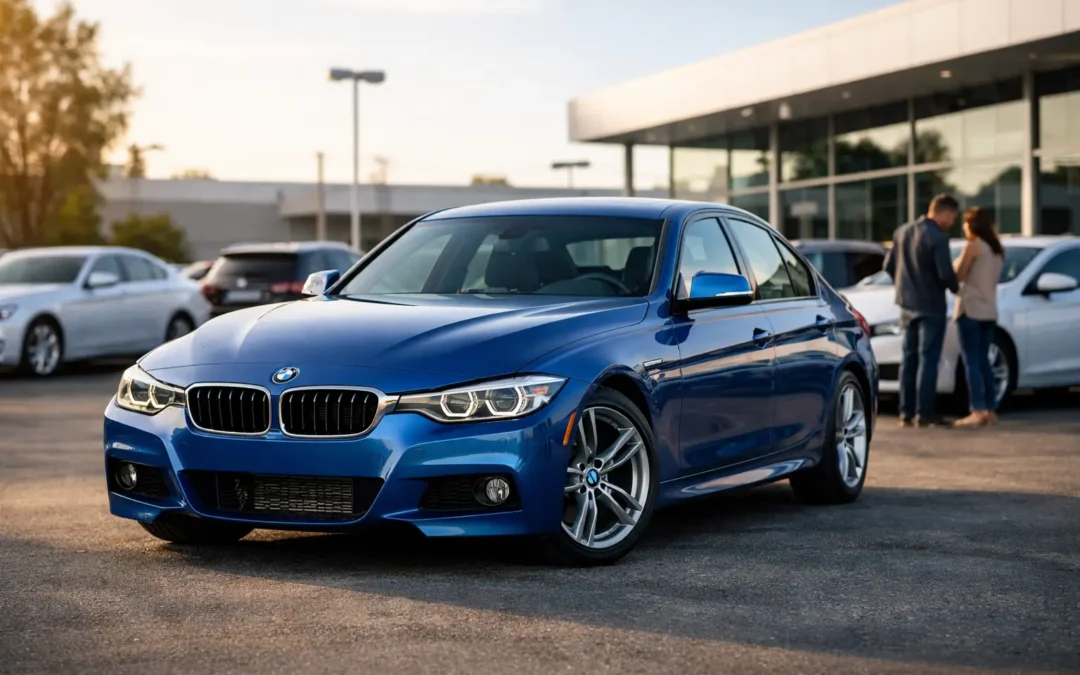
A well-chosen BMW 3 Series can make an ordinary drive across Limassol feel properly special. It is comfortable enough for daily commuting, composed on the highway, and still engaging when the road opens up. But a BMW 3 Series used review should never be based on the badge alone. The right car can be a rewarding premium purchase. The wrong one can turn deferred maintenance into an expensive ownership experience.
For buyers who want executive comfort without moving into a large SUV, the 3 Series remains one of the strongest used choices on the market. It suits professionals, couples, small families, and anyone who values a car that feels polished without being difficult to park or costly to fuel in the way larger luxury models can be.
Why the Used BMW 3 Series Still Stands Out
The 3 Series has built its reputation on balance. BMW has consistently made this model feel more connected to the road than many similarly priced luxury sedans, while retaining the refinement expected from a premium vehicle. The driving position is excellent, the cabin layout is intuitive, and most examples offer a level of comfort that makes longer journeys easy.
It also gives buyers genuine choice. A four-door sedan is the traditional option, while Touring wagon versions add useful luggage space for families and business users. Depending on generation and specification, there are efficient diesel engines, responsive gasoline models, plug-in hybrids, and high-performance M-badged variants.
That choice is an advantage, but it means there is no single best 3 Series. The right model depends on how you drive, what you want to spend after purchase, and whether performance, fuel economy, or low-risk ownership matters most.
BMW 3 Series Used Review: Which Generation to Choose?
The generation matters more than the model name on the trunk. Condition, service history, and specification should always lead the decision, but each recent 3 Series era has a distinct character.
E90 and E91: Affordable Entry to BMW Ownership
The E90 sedan and E91 wagon were sold through much of the late 2000s and early 2010s. They still feel rewarding from behind the wheel and can represent good value when maintained correctly. Their age is the main consideration. At this stage, even a low-mileage car can need attention to cooling components, suspension bushings, oil leaks, electronics, and rubber seals.
These cars make sense for buyers who appreciate the driving experience and have budgeted for preventative maintenance. They are less suitable for someone who wants the lowest possible running risk. A cheap purchase price is not the same as a cheap car to own.
F30 and F31: The Smart Used Market Sweet Spot
The F30 sedan and F31 Touring, sold broadly from 2012 to 2019, are often the strongest value proposition. They are modern enough to offer useful infotainment, better efficiency, and a more refined cabin than older cars, yet they are generally more accessible than the newer G20 generation.
A facelifted F30, introduced later in the production run, is particularly appealing. It brought sharper styling and updates that improved the overall package. The 320i and 330i gasoline models suit many drivers, while the 320d can be a sensible choice for high-mileage highway use. However, diesel is not automatically the best answer for every driver. Frequent short journeys can be hard on diesel emissions equipment, so a gasoline or plug-in hybrid model may be more appropriate for primarily urban use.
G20: The Most Complete Modern Choice
The G20, introduced for the 2019 model year, feels like a significant step forward in technology, cabin quality, and everyday refinement. It remains sporty, but its ride and noise insulation are more mature. For buyers who want a used premium sedan that still feels current, it is difficult to overlook.
The 330i is a standout for buyers who want brisk performance without stepping into M-car ownership costs. The 330e plug-in hybrid can be attractive for drivers able to charge regularly and complete many local trips on electric power. If charging is inconvenient, though, do not buy a plug-in hybrid simply for its official fuel economy figure. Its benefits depend heavily on your routine.
Engines and Transmissions: Match the Car to Your Driving
A 3 Series should be selected with your real mileage in mind, not an idealized version of your lifestyle. For regular city driving, school runs, and shorter trips around Limassol, a gasoline 320i or 330i is often the straightforward option. These cars warm up quickly, feel responsive in traffic, and avoid some of the emissions-system concerns associated with diesel use on short routes.
For drivers covering substantial highway mileage, a diesel 320d can deliver strong fuel economy and effortless overtaking torque. The condition of the diesel particulate filter, EGR system, and related components deserves careful attention, especially if the car has spent much of its life in town.
BMW’s eight-speed automatic transmission is widely regarded as one of the model’s strengths. It is smooth, quick to respond, and well matched to both gasoline and diesel engines. During a test drive, it should shift cleanly at low and high speeds, without jolts, hesitation, or warning messages. A manual transmission can be enjoyable and may appeal to enthusiasts, but automatic versions are typically easier to sell and more relaxing in daily traffic.
What to Check Before Buying a Used 3 Series
A premium used car deserves a proper inspection. Service records are more valuable than a low odometer reading without proof of care. Ask when the oil was changed, whether brake fluid and transmission servicing have been addressed where applicable, and what major work has already been completed.
Start with the basics. Check that the engine starts cleanly from cold, idles smoothly, and has no unusual smoke or warning lights. Inspect the tires for even wear, as uneven wear can point to alignment, suspension, or previous impact issues. On a road test, listen for knocks over rough surfaces and make sure the steering feels direct rather than loose or vague.
Electronic features should be tested individually. Try the climate control, parking sensors, cameras, infotainment screen, window switches, central locking, and all dashboard functions. A premium car has more equipment, and small electrical faults can become frustrating if they are ignored.
It is also worth checking the vehicle history carefully. Confirm mileage consistency, verify the service record, inspect for signs of accident repairs, and ensure any recalls or campaigns have been completed. A pre-purchase inspection by a qualified BMW specialist is a sensible expense, particularly on older examples or higher-performance models.
Running Costs: Premium, but Manageable With the Right Car
The BMW 3 Series is not a budget sedan, and it should not be approached like one. Quality tires, brakes, suspension parts, and servicing will cost more than they would for a basic compact car. The advantage is that a well-maintained example usually feels, drives, and presents like a more expensive vehicle.
Avoid focusing only on monthly fuel spend. Tires, insurance, scheduled servicing, and unexpected repairs all belong in the ownership calculation. Larger wheels may look better, but they can mean pricier tires and a firmer ride on uneven roads. A car with a sensible wheel size, complete maintenance record, and no overdue work is often a better purchase than a higher-spec example with an uncertain past.
This is where buying from a quality-focused seller adds confidence. At NXM Empire, the focus is on offering used vehicles that make sense for real life in Cyprus, with clear information and the opportunity to choose a vehicle that fits both your needs and your budget.
Is a Used BMW 3 Series Right for You?
Choose a used 3 Series if you want more than transport. It is a car for drivers who appreciate comfort, presentation, and a confident driving feel, whether arriving at a client meeting or heading out for the weekend. A 320i or 330i is a sensible place to start for many buyers, while a 320d rewards high-mileage drivers and a 330e suits those with dependable charging access.
Skip the cheapest available example. With this model, a clean history, professional inspection, and evidence of consistent care matter far more than a tempting headline price. Take the time to test the car on the roads you actually use, review its records carefully, and choose the specification you will still be happy to live with long after the first drive.