
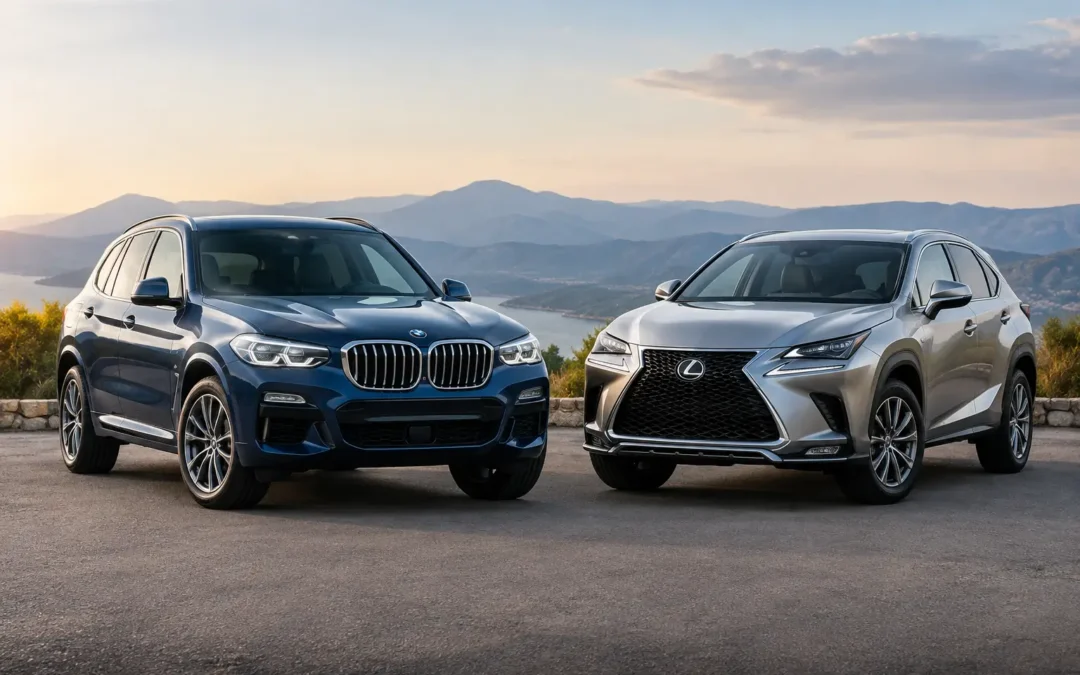
A premium SUV should make daily life easier, whether that means a calmer school run in Limassol, confident motorway travel, or arriving at a client meeting in a car that reflects your standards. In the BMW X3 versus Lexus NX decision, both models deliver quality, technology, and a premium driving experience, but they take distinctly different routes to get there.
The BMW X3 is the more traditional choice for drivers who want space, confident road manners, and familiar German performance. The Lexus NX leans into quiet comfort, striking design, and hybrid efficiency. Neither is automatically the better SUV. The right choice depends on how you drive, who travels with you, and whether you value an engaging drive or a more relaxed premium experience.
BMW X3 versus Lexus NX at a glance
The BMW X3 is generally the larger and more versatile vehicle. It has a more upright SUV shape, a roomier rear seat, and a larger cargo area than the NX. For a family carrying luggage, a stroller, work equipment, or regular airport bags, that extra practicality is meaningful rather than merely a number on a specification sheet.
The Lexus NX is slightly more compact and feels more urban-focused. Its dimensions make it easier to place in tighter parking areas, while its cabin creates a polished, cocooned feeling. It is still a practical five-seat SUV, but buyers who regularly use the rear seats for taller adults or need maximum cargo flexibility may find the X3 more accommodating.
Both present well outside a hotel, office, or restaurant. The BMW has a purposeful, athletic appearance that suits drivers who prefer understated executive confidence. The Lexus is bolder and more design-led, particularly with its sharp lighting and distinctive grille. Your preference here is personal: the X3 blends in with premium business settings, while the NX makes more of a visual statement.
Driving feel: confident performance or composed comfort?
This is where the difference is easiest to feel from the driver’s seat. BMW has built the X3 around balance and control. Even standard versions tend to feel responsive, stable, and well weighted through bends. The steering is direct, and the chassis gives the driver more information about the road. On longer drives across Cyprus or frequent motorway journeys, the X3 feels settled and capable.
That character comes with a trade-off. Depending on wheel size and trim, the BMW can feel firmer over broken urban pavement than the Lexus. It is not uncomfortable, but its priority is driver involvement rather than isolating every road imperfection.
The Lexus NX favors a calmer approach. Hybrid versions are particularly smooth at lower speeds, where electric assistance can make city traffic noticeably more relaxed. The ride is usually more comfort-focused, and the cabin has a quieter, more refined atmosphere when driving gently. It is a strong match for drivers who spend much of their time in town, value a peaceful commute, or simply do not need their SUV to feel sporty.
The NX can still move with confidence, especially in more powerful versions, but it does not encourage the same style of driving as the X3. Choose the Lexus for composure. Choose the BMW if you want an SUV that feels more connected and rewarding when the road opens up.
Engines, hybrid options, and real-world running costs
Powertrain availability varies by model year and local specification, so it is always worth checking the exact vehicle rather than relying on a badge alone. Broadly, the X3 offers gasoline, diesel in some markets, plug-in hybrid, and performance-oriented choices. This creates a wide range of personalities, from efficient long-distance transport to genuinely quick premium motoring.
The Lexus NX range places more emphasis on electrification. Conventional hybrid models are a major attraction for drivers who want lower fuel use in stop-start traffic without the need to plug in. Plug-in hybrid NX versions can also make sense for people with dependable charging at home or work and regular shorter journeys.
For many drivers, the most sensible comparison is not maximum horsepower but how the SUV will be used. If your routine involves frequent city driving, the NX hybrid’s smooth low-speed behavior and efficiency can reduce fuel spending. If you cover longer distances, carry passengers often, or prefer stronger overtaking response at motorway speed, an X3 with the appropriate engine may justify its higher fuel use.
A plug-in hybrid only delivers its potential when it is charged consistently. Without regular charging, it can become a heavier vehicle carrying battery capacity that provides little benefit. Be realistic about your parking arrangement and daily mileage before choosing one.
Cabin quality, technology, and everyday usability
Both cabins feel premium, but their strengths differ. The X3 uses a driver-centered layout that is logical and easy to learn. Its controls and displays are designed to make common functions accessible without turning every adjustment into a screen-based task. The seating position is excellent, and the interior feels built for long days behind the wheel.
The Lexus NX has a more modern, lounge-like feel. Materials, trim details, and seat comfort give it a high-end impression. Its infotainment setup in newer models is more contemporary than older Lexus systems, though some drivers will still prefer BMW’s combination of screen and physical controller-based operation.
Before making a decision, sit in both vehicles with your normal needs in mind. Check rear-seat access, visibility at junctions, phone connectivity, cargo opening height, and the ease of fitting child seats if relevant. Premium ownership is not only about leather and screens. It is about whether the vehicle works effortlessly on an ordinary Tuesday.
Reliability, ownership confidence, and resale appeal
Lexus has a strong reputation for reliability, and that matters to buyers who want predictable ownership. Its hybrid systems have been used across the brand for many years, giving cautious drivers added reassurance. A well-maintained NX can be an appealing choice for those who prioritize peace of mind over driving excitement.
The X3 also has strong appeal in the used premium SUV market, especially when it has a clear service record, sensible specification, and good overall condition. BMW ownership is most rewarding when maintenance is not postponed. Service history, tire condition, electronics, and the exact engine choice deserve careful attention when buying used.
For either model, dealer-approved vehicles and documented maintenance are worth prioritizing. The purchase price is only one part of the decision. Insurance, servicing, tires, fuel, depreciation, and unexpected repairs all affect the real monthly cost of driving.
That is also why a long-term rental can be a practical alternative to immediate ownership. With NXM Empire, eligible long-term rentals are structured around a fixed monthly payment that includes maintenance, comprehensive insurance, road tax, and tires. It gives drivers the freedom to enjoy a premium SUV without taking on every ownership variable individually.
Which premium SUV should you choose?
Choose the BMW X3 if you need more rear-seat and cargo space, enjoy responsive handling, or want an executive SUV that performs confidently on long journeys. It is the stronger all-rounder for an active family, frequent traveler, or driver who sees the journey as part of the experience.
Choose the Lexus NX if refined city driving, hybrid efficiency, and a quiet, comfort-led cabin are higher on your list. It suits drivers who want premium design and reassuring ownership credentials in a slightly more compact package.
The best test is simple: imagine your actual week, not your ideal weekend. Consider where you park, how far you travel, who rides with you, and what a predictable monthly motoring cost is worth to you. The SUV that fits those answers will feel premium long after the first drive.