
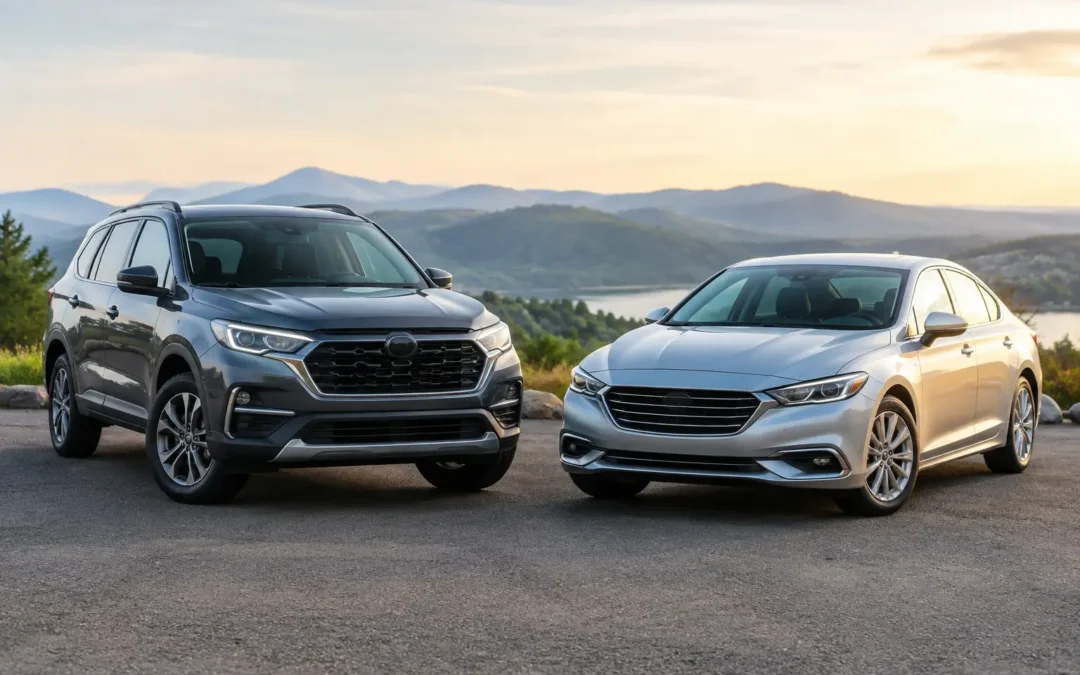
A car can look perfect in the showroom and feel wrong by the end of its first week. That is why the used SUV versus sedan decision should start with your real routine: where you park in Limassol, how often you carry passengers, the roads you drive, and what you want to spend after the purchase price.
Both body styles can be excellent used-car choices. A sedan often delivers lower running costs, composed road manners, and executive appeal. An SUV brings a higher seating position, more flexible cargo space, and the confidence to handle family plans, uneven roads, and larger loads with less compromise. The right answer is not about following a trend. It is about choosing a vehicle that makes everyday driving easier.
Used SUV Versus Sedan: Start With Your Daily Needs
A sedan is usually the more natural fit for drivers whose routine centers on city commuting, business meetings, and regular highway travel. Its lower profile can make it easier to park in tight spaces, and its lighter, more aerodynamic shape often helps with fuel consumption. For professionals who want a refined arrival without moving into a large vehicle, a quality used executive sedan can feel polished, comfortable, and practical.
An SUV earns its place when your day involves more people, more equipment, or more variety. Parents may value the easier access to child seats and the extra room for bags, strollers, sports gear, or weekly shopping. Drivers who frequently travel outside the city may prefer the added ground clearance and more commanding view of the road.
Think beyond the number of seats. A five-seat sedan and a five-seat SUV may technically carry the same number of people, but they do not provide the same experience when everyone brings luggage. If rear-seat comfort and cargo flexibility matter every week, an SUV may justify its higher operating costs.
Space and Comfort: Where the Difference Feels Real
SUVs generally offer a more upright cabin and a larger opening at the rear, which makes loading bulky items simpler. This is useful for families, airport runs, work equipment, or an active weekend lifestyle. Many drivers also appreciate sitting higher in traffic, particularly on busy Limassol routes where visibility can make driving feel more relaxed.
That said, size alone does not guarantee comfort. A compact SUV may have less rear legroom than a midsize sedan, while a well-equipped sedan can offer a quieter, more supportive long-distance ride. Check the actual rear-seat space, trunk capacity, and door openings of the specific model you are considering rather than relying only on the vehicle category.
Sedans have another advantage that is easy to overlook: their trunks are enclosed and separated from the cabin. This can help with security and cabin quietness, especially on longer journeys. An SUV’s hatchback layout is more versatile, but luggage is closer to passengers unless a cargo cover is fitted and used.
Parking and city driving
In Cyprus, the practical test often happens in parking lots and narrower streets, not on an open road. A sedan’s lower height can make it easier to judge low car parks and maneuver into compact spaces. Its length still matters, however. A large executive sedan can be less convenient in town than a compact crossover.
Before making a decision, consider where the car will spend most of its time. Measure your parking space if needed. Test the turning circle, rear visibility, camera quality, and parking sensors during a proper drive. Small details can determine whether a vehicle feels effortless or frustrating every day.
Running Costs Matter as Much as the Purchase Price
Used cars can represent excellent value, but the monthly reality includes fuel, insurance, maintenance, tires, road tax, and unexpected repairs. In general, a sedan with a smaller engine will be more economical than a comparable SUV. It is often lighter, more aerodynamic, and fitted with smaller tires, all of which can reduce regular costs.
SUVs can cost more to fuel and maintain, particularly premium models with larger engines, all-wheel drive, or oversized wheels. Premium tires and suspension components may also carry higher replacement costs. That does not make an SUV a poor financial choice. It simply means its added space and capability should deliver value for your lifestyle.
Hybrid options can narrow the gap considerably. A used hybrid sedan can be an excellent choice for frequent urban driving, while a hybrid SUV offers practical family space without the fuel use traditionally associated with larger vehicles. Battery condition, service history, and the availability of qualified maintenance should be part of the evaluation for any used hybrid.
The most sensible approach is to calculate a realistic monthly budget before viewing cars. Include the purchase price or finance payment, expected fuel use, insurance, annual servicing, and a reserve for wear items. A vehicle that costs slightly more upfront but has a complete service record and strong condition may be the more confident choice over time.
Driving Feel, Safety, and Confidence
A sedan typically sits lower to the road, which can make it feel more stable and composed through corners. Drivers who enjoy a connected, controlled drive often prefer this character. It is especially appealing in premium saloons, where ride comfort, cabin refinement, and highway performance are central to the experience.
An SUV provides a higher driving position and, in many cases, a more relaxed view ahead in traffic. For some drivers, that extra visibility creates immediate confidence. However, a taller body can lean more in turns, and the feeling behind the wheel varies widely between models. A premium SUV with advanced suspension may feel remarkably controlled, while an older or entry-level model may feel less settled than a good sedan.
Safety should be assessed model by model, not simply by vehicle height. Look for a documented maintenance history, sound tires, working brakes, intact airbags, and no warning lights. Useful driver-assistance features can include parking sensors, a reversing camera, blind-spot monitoring, lane support, and automatic emergency braking. On a used vehicle, confirming that these systems function properly is more valuable than seeing them listed on a brochure.
What to Check Before You Buy a Used SUV or Sedan
Condition and history matter more than the badge on the grille. A well-cared-for sedan is a better purchase than a neglected SUV, and the reverse is equally true. Ask for clear information about service intervals, previous repairs, mileage, tires, brakes, and ownership history.
During a test drive, listen for suspension noise over uneven surfaces, check that the transmission shifts smoothly, and make sure the air conditioning works effectively. Test every major feature, including windows, central locking, infotainment, cameras, and seat adjustments. For SUVs, inspect the tailgate operation, cargo area, and underbody condition. For sedans, check trunk seals and ensure the trunk opens and locks correctly.
A dealer-approved or carefully inspected vehicle can offer valuable reassurance, particularly when buying a premium used model. NXM Empire focuses on quality used vehicles across practical, executive, and luxury categories, helping drivers choose with clearer expectations around condition and value.
When a Sedan Is the Better Choice
Choose a used sedan when you primarily drive alone or with one passenger, value fuel efficiency, and want a refined vehicle for commuting or business use. It is also a strong choice for drivers who prefer precise road handling and do not need frequent access to a large cargo area.
A sedan can be the smart route into premium ownership. A well-maintained BMW, Mercedes-Benz, Lexus, or similar executive model may provide comfort, technology, and presence at a more accessible price than a comparable SUV. The key is to select a vehicle that matches your maintenance budget, not only your preferred image.
When an SUV Is Worth the Extra Cost
Choose a used SUV if flexibility is central to your lifestyle. Families, frequent travelers, drivers with outdoor hobbies, and people who regularly transport larger items are likely to benefit from the additional space. It can also be the better fit if a higher seating position makes you feel more comfortable and confident.
For buyers seeking premium presence, an SUV often combines luxury, practicality, and a strong road presence in one vehicle. Just make sure the size is appropriate. A compact premium SUV may deliver all the style and everyday usability you need without the fuel and parking demands of a larger model.
The best used car is the one that still feels right after the school run, the work commute, the supermarket stop, and the weekend drive. Take your time, test it in conditions close to your normal routine, and choose the vehicle that gives you confidence every time you reach for the keys.