
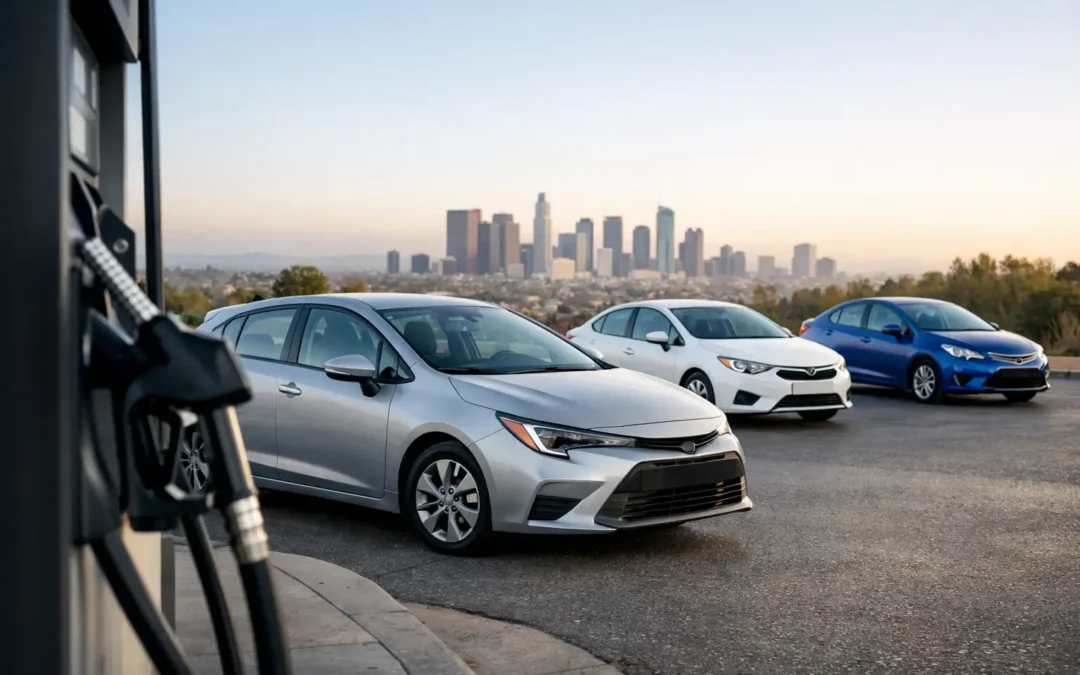
Morning traffic has a way of making every extra euro at the pump feel personal. That is why fuel efficient commuter cars remain one of the smartest choices for drivers who want dependable daily transport without letting running costs creep up month after month.
For many drivers in Cyprus, the right commuter car is not the cheapest car and it is not always the smallest one either. The best fit is the vehicle that keeps fuel spend under control, stays comfortable in stop-and-go traffic, and makes everyday use simple. If you are commuting across Limassol, covering school runs, or managing regular business travel, efficiency matters most when it works alongside reliability, safety, and predictable costs.
What makes fuel efficient commuter cars worth it
Fuel savings are the obvious advantage, but they are only part of the value. A well-chosen commuter car can reduce the total cost of getting around by lowering not only fuel use, but often maintenance strain and day-to-day wear. When a vehicle is sized appropriately for city driving and regular commuting, it tends to be easier to park, easier to maneuver, and less tiring to live with.
That said, efficiency should never be treated as a standalone metric. A car that posts excellent consumption figures on paper may feel too cramped for a family, underpowered on highway stretches, or lacking in the comfort features that make daily driving easier. Real value comes from balance.
For some drivers, that balance points toward a compact hybrid. For others, a small gas sedan or hatchback still makes more sense because the upfront cost is lower and the driving pattern is straightforward. The right answer depends on how many miles you cover, where you drive most often, and whether you want to rent long term or buy.
How to choose fuel efficient commuter cars
The first question is simple. What does your commute actually look like? A car used mainly in urban traffic has different strengths than one used for longer highway routes. Hybrids tend to shine in lower-speed city driving because they can rely more on electric assistance in traffic. Conventional gas models can still be a very smart option for mixed use, especially when the vehicle is lightweight and sensibly sized.
The second question is about cost structure. Many drivers focus only on purchase price, but monthly mobility costs are broader than that. Fuel, maintenance, insurance, registration, and tires all matter. This is where a long-term rental can be especially appealing. Instead of handling each ownership cost separately, you have one clear monthly figure and can choose a vehicle that matches your usage without a long-term commitment to keeping it.
The third question is comfort. If you spend a lot of time in traffic, small features become major ones. Supportive seats, light steering, good visibility, effective air conditioning, and modern driver assistance can have more impact on your day than shaving off a tiny amount of fuel use. The best commuter car is the one you will still be happy to drive after six months of routine use.
The best types of fuel efficient commuter cars
Hybrid city cars
For urban and suburban commuting, hybrid city cars are often the strongest all-around choice. They offer excellent fuel economy in traffic, quiet low-speed driving, and a smooth, easy character that suits everyday use. For drivers who want lower fuel bills without moving into a fully electric setup, hybrids are a practical middle ground.
They are especially appealing for people who want efficiency with convenience. There is no charging routine to manage, and many hybrid models have strong reliability records. The trade-off is that they can cost more than comparable non-hybrid models, whether you are buying outright or paying a higher monthly rate for a newer example.
Compact hatchbacks
Compact hatchbacks continue to earn their place because they are versatile, efficient, and easy to live with. They usually offer enough cabin room for daily needs, simple parking in tighter urban areas, and lower fuel consumption than larger sedans and SUVs.
This category suits drivers who want straightforward value. A good hatchback may not carry the premium feel of an executive car, but for commuting, errands, and weekend flexibility, it often gets the basics exactly right. If your priorities are manageable costs and practical use, this is one of the safest decisions you can make.
Small sedans
A small sedan can be a better fit for drivers who spend more time on open roads or want a slightly more refined feel than a hatchback. These cars often deliver strong fuel economy while adding a more settled highway character and a separate trunk.
The trade-off is flexibility. Hatchbacks tend to be easier for bulky shopping, luggage, or family gear. Sedans may look more polished and feel a touch more substantial, but they are not always the most adaptable choice for mixed daily life.
Efficient crossovers
Not every commuter wants a low, compact car. Some drivers prefer a higher seating position, easier entry and exit, or extra room for passengers. In those cases, an efficient crossover can make sense. Modern small crossovers have improved significantly in fuel economy, and some hybrid versions are very convincing commuter vehicles.
Still, this is where honesty matters. Even a fuel-conscious crossover usually will not match the efficiency of a smaller hybrid hatchback. You are paying for more space, a different driving position, and often a stronger visual presence. If those benefits matter to you every day, the difference may be worth it.
Rent or buy for daily commuting?
If your main goal is cost control and flexibility, renting long term deserves serious consideration. It removes much of the uncertainty that comes with ownership and makes monthly budgeting easier. For commuters, that can be a major advantage, especially when maintenance, insurance, road tax, and tires are bundled into one fixed structure.
Buying can still be the right move if you know exactly what you want and plan to keep the vehicle for years. Ownership gives you long-term control and, depending on the vehicle, can work out well over time. But it also means carrying the administrative burden and taking on the risk of unexpected repairs or depreciation.
A provider such as NXM Empire speaks directly to this gap in the market. If you want a fuel-efficient daily driver without the full commitment of immediate ownership, long-term rental offers a clear, convenient path. It is a practical solution for individuals, families, and companies that want dependable mobility with transparent costs.
What drivers often overlook
One of the biggest mistakes is choosing more car than the commute really requires. A larger vehicle may feel appealing at first, but extra weight and size usually mean higher fuel use and a less efficient daily routine. If most of your driving is one or two people in urban traffic, a compact model is often the smarter fit.
Another oversight is ignoring the comfort side of efficiency. A car that saves fuel but feels noisy, cramped, or tiring can become frustrating fast. Daily driving is repetitive by nature, so small discomforts add up. It is better to choose a car that is slightly less efficient on paper but clearly better for your real routine.
Drivers also tend to underestimate the value of predictable monthly expenses. A car with attractive fuel economy can still become expensive if maintenance, insurance, or tire costs catch you off guard. That is why the full ownership picture matters just as much as miles per gallon.
A smart commuter car should fit your life
The best fuel efficient commuter cars are not defined by one badge, one body style, or one price point. They are defined by fit. The right car keeps your daily driving economical, comfortable, and uncomplicated, whether that means a compact hybrid for city use, a small hatchback for practical flexibility, or an efficient crossover that gives you extra room without going too far on running costs.
If your commute is a constant part of your week, your vehicle should make that routine easier, not more expensive or more stressful. Choose the car that matches how you actually drive, what you actually need, and the level of flexibility that makes sense for you now.